Memorial Day Business Resilience Through Cyber Incident Drills
Memorial Day often signals slower schedules, reduced staffing, and a shift in priorities for many teams. For cybersecurity and operations, that rhythm can be risky. Attacks do not respect holiday calendars, and downtime can matter more when key people are off the clock. Cyber incident drills are one of the few readiness activities that pay off immediately, because they test decisions under pressure rather than hoping plans work when something breaks.
This article focuses on using Memorial Day as a practical trigger for cyber incident drills. The goal is not to cause disruption, or to turn a holiday into an emergency rehearsal. Instead, it is to build confidence that your organization can detect, communicate, and recover fast enough to protect people, customers, and critical services.
Why drills matter more on holiday-adjacent schedules
Cyber incidents are chaotic by nature. Even a well-resourced team can struggle when key knowledge is unavailable, when vendors take longer to respond, or when decision-making routes become unclear. Holiday-adjacent staffing patterns introduce specific friction points, like reduced monitoring coverage, limited access to on-call engineers, and slower internal approvals.
Drills reduce that friction by rehearsing how you operate when normal routines fail. A drill forces you to practice:
- What gets escalated first, and to whom
- How you triage evidence and isolate systems
- How you coordinate with IT, security, legal, and communications
- How you keep essential services running during recovery
- How you document what happened so you can improve afterward
Real incidents often differ from the tabletop scenarios, but rehearsals still create a durable advantage. Teams learn the “muscle memory” of roles, communication tempo, and documentation habits.
Common drill types you can run without creating chaos
You don’t need a full-blown simulation involving destructive actions to get value. Different drill types answer different questions. A practical approach is to combine lightweight exercises with one deeper scenario once policies and roles are stable.
- Tabletop exercise (TTX): Teams walk through a scenario, discuss decisions, and produce actions and logs. No systems are touched.
- Technical incident walkthrough: Engineers follow a live checklist using sample alerts, confirming telemetry, dashboards, and enrichment sources.
- Notification and escalation drill: Focuses on contact trees, paging, and internal comms, using pre-scripted triggers.
- Tabletop with injects: New facts arrive at timed intervals, like “the attacker is moving laterally,” or “a third-party portal is unavailable.”
- Limited technical simulation: A contained environment mimics an attack path, typically using staging systems, tooling, or replayed telemetry.
For Memorial Day, many teams find that tabletop exercises with timed injects and an escalation drill deliver immediate value. They validate readiness without interrupting production.
Designing a Memorial Day-specific incident scenario
A strong scenario is tailored to the reality of holiday constraints. Build the story around delays, partial staffing, and vendor response times. The scenario should reflect what your organization actually relies on, such as identity providers, payment processing, customer portals, email gateways, backups, and remote access.
Here are three scenario patterns that work well because they test different parts of the incident lifecycle.
- Credential compromise and ransomware threat: An employee account is suspected to be compromised, followed by unusual login patterns and mass file encryption warnings on a subset of servers.
- Business email compromise leading to service disruption: A finance or operations email account is used to request payment changes, while the security team also detects suspicious mailbox forwarding rules and threat actor persistence.
- Third-party outage with potential data exposure: A vendor portal goes down, logs show potential unauthorized access attempts, and customers report timeouts while internal teams debate scope and notification timing.
Injects should arrive in short bursts. For example, at minute 10, a help desk ticket says, “Users cannot sign in, but password resets are failing.” At minute 20, legal asks for an initial timeline estimate. At minute 30, a leader needs a status update for executives. At minute 40, the SOC lead gets confirmation of lateral movement indicators.
When you design injects, keep them realistic and readable. Teams should spend time making decisions, not deciphering contrived facts.
Roles and responsibilities, tested under stress
Many organizations have incident response roles defined on paper, but holiday schedules strain the human layer. Drills help you verify that the right people are reachable, that authority is understood, and that responsibilities are not concentrated in a single person who is off-site.
For a Memorial Day drill, ensure that each role has a substitute path. At minimum, define who can act as:
- Incident commander, or the person who coordinates the response
- SOC lead who triages and validates evidence
- IT operations contact who manages containment actions
- Communications lead for internal and external updates
- Legal or compliance advisor who advises on notifications and documentation
- Third-party liaison who coordinates with managed security providers and key vendors
- Executive sponsor, who receives status updates and approvals
Run the escalation drill separately if needed, but treat it as part of the same exercise. If the incident commander cannot get a response within the target timeframe, the tabletop decisions will not translate into action during a real event.
Building the drill agenda around decision points
A drill should not become a lengthy discussion. It should create decision points and deliverables. Consider a simple structure, adjusted for your organization’s size and maturity.
- Pre-brief (10 to 15 minutes): Review objectives, safety boundaries, and the expected communication cadence.
- Scenario introduction (5 to 10 minutes): Present initial symptoms, alert details, and what the organization has observed so far.
- Decision round 1 (15 to 20 minutes): Determine scope assumptions, immediate containment considerations, and evidence preservation steps.
- Inject round (15 to 20 minutes): Add new facts that change risk, like evidence of persistence, an impacted business process, or a customer complaint.
- Status and approvals (10 minutes): Produce an executive update and document what decisions require approval.
- Recovery planning discussion (10 to 15 minutes): Address continuity of operations, restore priorities, and verification steps.
- After-action review planning (10 minutes): Identify top improvements and assign owners with deadlines.
This schedule works well for holiday timing because it creates a clear end point. People can participate without pulling resources from critical operations longer than necessary.
Communication drills that prevent “panic by spreadsheet”
When an incident begins, communication often becomes a patchwork of messages, Slack threads, call recordings, and partial facts. A Memorial Day drill is a chance to standardize message quality. Teams should practice how to write short updates and how to record decisions.
Use communication templates during the drill, but don’t treat them like scripts. The aim is to make messages consistent, not to restrict clarity.
- Internal status update: Who is impacted, what we know, what we suspect, what we are doing next.
- Help desk or customer support briefing: What symptoms customers might see, what to tell them, and where to route tickets.
- External statement draft: A placeholder that avoids details you cannot confirm yet.
- Evidence and timeline notes: A place to capture times, decision rationale, and evidence sources.
In many organizations, the biggest communication failure is not misinformation. It is the delay between discovery and consistent messaging. The escalation drill helps reduce that gap by forcing a shared tempo across teams.
Memorial Day constraints to deliberately include in injects
Instead of treating the holiday as a vague backdrop, translate constraints into specific injects. Doing so turns abstract risk into concrete practice.
- Reduced staffing: The SOC analyst on duty is unavailable for the next hour, forcing escalation to a secondary responder.
- Travel or PTO: The primary business process owner is out, so operations must decide with a delegate.
- Vendor delay: A managed service provider requests additional verification before taking certain containment steps.
- Approval bottleneck: Legal asks for additional context before advising customer notifications, extending the timeline.
- Connectivity issues: A VPN gateway experiences intermittent availability while the team is trying to confirm attacker behavior.
Real-world examples show that these “friction” conditions can matter as much as the technical attack. A well-timed inject that tests cross-functional decision-making often improves readiness more than a highly technical detail that only SOC engineers understand.
Evidence handling and documentation, practiced before it matters
After an incident, teams frequently discover that they can’t reconstruct the timeline. Evidence exists, but it is scattered across ticket systems, chat logs, and personal notes. A drill helps you validate that you can preserve evidence quickly and consistently.
During the exercise, include steps such as:
- Capture initial indicators, include timestamps, and record where each indicator came from.
- Document hypotheses and why they are plausible, avoid guessing without marking it clearly.
- Record containment decisions, including what was done, when, and by whom.
- Maintain a list of systems reviewed, and note what confirmed or denied each hypothesis.
- Save communications artifacts, including message drafts and approval notes.
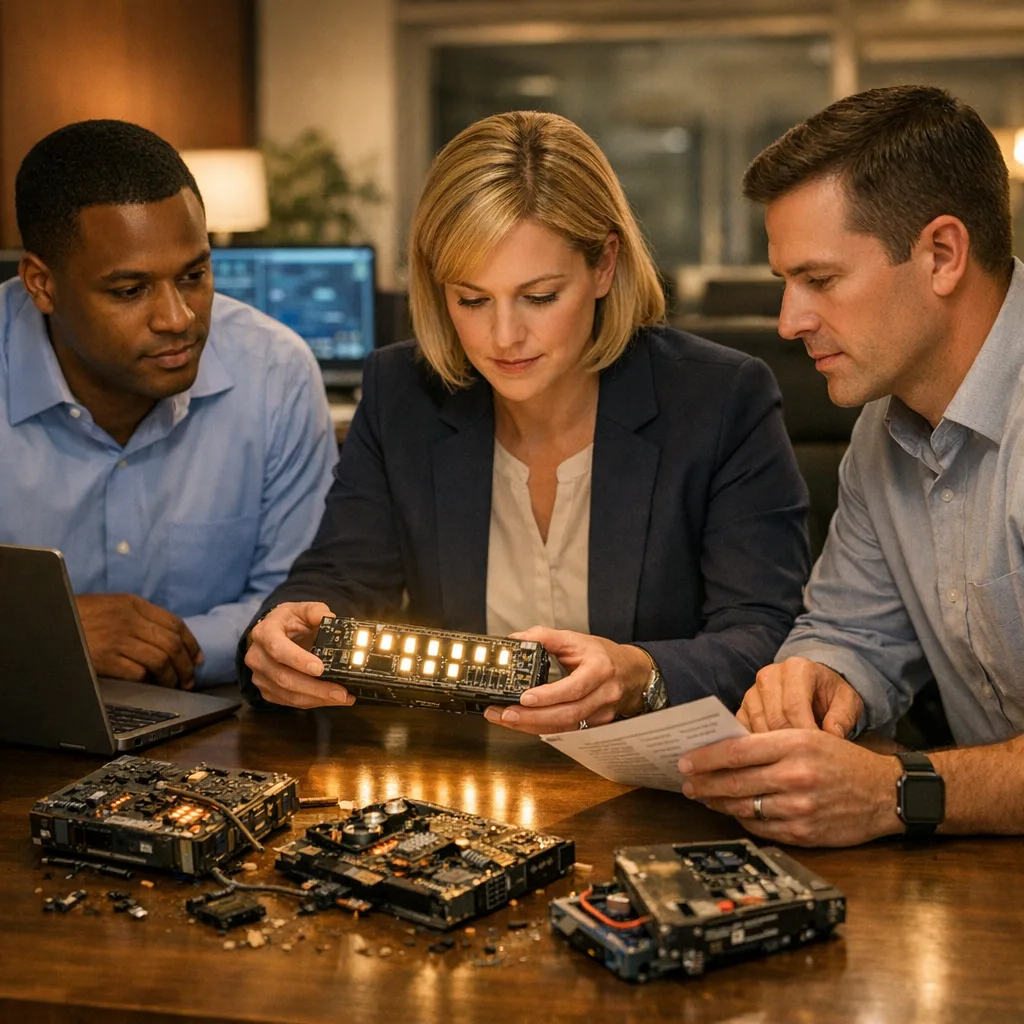
Many organizations also benefit from practicing how to collect evidence for forensic analysis while preserving business operations. For example, the team can confirm whether endpoint detection logs are retained long enough, and whether backup snapshots are accessible for recovery verification.
Recovery planning drills that test more than backups
Ransomware discussions often focus on restore capability, but resilience requires more than having backups. Recovery is a sequence of decisions: which data to restore first, how to verify integrity, when to bring systems back online, and how to communicate expected service levels.
A Memorial Day drill can stress recovery planning by injecting questions that appear later in real incidents. For example:
- “Do we restore production first, or do we restore identity controls first to reduce re-compromise risk?”
- “Which systems are critical for customer access during the first 24 hours?”
- “How do we validate that restored data is not reinfected?”
- “What is the decision process for declaring a system clean enough to reconnect?”
To make this practical, require the team to output a prioritized recovery list with owners and time estimates. Even a draft plan improves readiness, because it reveals gaps in system knowledge and dependencies.
Real-world incident postmortems across industries often mention prolonged downtime due to unclear dependencies and insufficient recovery testing. You can reduce that risk by verifying during the drill that the team knows where restoration tools are, who has access, and how quickly the organization can validate restored services.
Integrating third parties and shared responsibilities
Many organizations depend on managed security providers, incident response partners, cloud platforms, and identity services. During holiday schedules, the coordination overhead increases. A drill can validate who contacts whom, what information is needed, and what decisions require authorization.
Include at least one inject that requires third-party involvement. Examples:
- A threat indicator suggests compromise in a managed email security layer, and the provider requires specific evidence before initiating certain actions.
- A cloud administrator account is suspected compromised, and you must coordinate with the cloud vendor support path to access audit logs.
- A key vendor that hosts your customer portal is down, while your team investigates whether it is an outage or an attacker pivot.
When third parties are involved, communication clarity becomes more important. The team should practice a short “facts to share” checklist, such as alert IDs, affected services, and relevant timestamps, so external partners can help faster.
Tools and checklists, used as decision aids
Checklists are not the same as plans, but they can reduce cognitive load during a stressful event. For Memorial Day, design checklists that support speed and clarity.
During the drill, test whether the team can execute:
- Alert triage steps, including how to validate false positives
- Identity containment steps, like disabling sessions or forcing resets, with documented approvals
- Network containment steps, including what boundaries are safe to change
- Backup restoration verification steps, including integrity and access checks
- Evidence collection steps, including retention and access
Try pairing checklists with roles. For example, the SOC lead might own triage and evidence documentation, while IT operations owns the technical containment steps that affect availability. This division reduces the risk that one team becomes blocked waiting for another to decide.
Measuring drill effectiveness with realistic metrics
After the exercise, success should be measured by readiness improvements, not by the speed of discussion. Use metrics that reflect real incident pressures.
Examples of measurable outputs include:
- Time to initial escalation: How long it took to get the right people engaged.
- Decision clarity: Whether decisions were documented with rationale and evidence references.
- Containment readiness: Whether the team could identify systems to contain quickly.
- Recovery prioritization: Whether a draft restoration sequence and validation plan existed.
- Communication quality: Whether messages had consistent facts and appropriate uncertainty language.
Keep the metrics lightweight. The objective is learning. Overemphasis on scoring can discourage participation or cause teams to optimize for performance rather than accuracy.
After-action review, turning practice into improvements
The value of a drill is realized through the after-action review. For holiday timing, schedule the review within one or two business days. That’s fast enough to maintain momentum, while still giving participants time to think.
A useful after-action review captures both strengths and weaknesses. Focus on actions you can complete quickly and actions that require planning.
Consider documenting:
- What decisions worked well, and why
- Where information was missing or ambiguous
- Which contacts were unreachable or slow to respond
- What evidence sources were difficult to access
- Which recovery dependencies were unclear
- What process changes are needed, like updating runbooks or contact lists
Assign owners and deadlines, and keep the list small enough to execute. A drill that produces a long backlog can lead to fatigue. A few concrete improvements delivered quickly build trust in the process.
A practical schedule for a Memorial Day drill without disrupting operations
Many teams plan drills around holiday calendars by reducing scope. Here is one schedule approach that balances preparedness with minimal disruption.
- Two to three weeks before: Choose the drill type, confirm roles and alternates, and identify the systems that matter most.
- One to two weeks before: Share the scenario at a high level, confirm escalation targets, and verify contact lists.
- Week of Memorial Day: Run the escalation drill first, then the tabletop with timed injects. Keep the session length appropriate for participants.
- Within 48 hours after: Conduct after-action review, assign owners, and update runbooks, contact lists, and templates.
This approach works for small teams, mid-sized organizations, and larger enterprises that have multiple business units. The main idea is to avoid waiting until everyone is busy again.
Real-world examples of drill-driven resilience
Organizations often share lessons from tabletop exercises after major incidents. While every company’s details differ, recurring patterns show where drills help.
For example, a mid-sized logistics firm might run a tabletop that starts with phishing credentials and escalates to ransomware threats. During the exercise, they discover that their help desk team is not included in early communications. In a real incident, that gap can lead to inconsistent customer updates. After the drill, the firm adds a help desk briefing step, assigns a support liaison, and creates a customer-facing symptom message template.
In another case, an online retailer might practice a drill where identity provider alerts trigger account lockouts and session anomalies. The team might realize that their recovery plan assumes access to specific administrator accounts, but those accounts are stored in a way that slows access during emergencies. After the drill, they refine privileged access procedures and verify backup access for identity-related configuration.
Even without naming specific firms, these patterns reflect common learning outcomes from incident exercises: communication gaps are discovered early, evidence handling needs clarity, and recovery depends on practical access.
How to keep the drill realistic without creating fear
Drills should be serious and structured, but they should not create panic or blame. On Memorial Day, the goal is confidence. You can achieve that by being transparent about the drill boundaries, the purpose, and the expected behavior during the exercise.
Set clear guardrails:
- State that no production systems will be altered during tabletop phases
- Confirm that participants should follow normal decision processes, including approvals
- Clarify that mistakes made during drills are learning opportunities, not performance evaluations
- Provide a clear time box and an after-action review schedule
When people feel safe participating, they are more likely to surface confusion early. That is where the biggest improvements happen.
Preparing participants before the exercise
Holiday schedules can reduce familiarity, because fewer people are available to participate in planning. Still, you can prepare effectively with minimal overhead.
Before the drill, share:
- The drill objectives, like validating escalation timelines and recovery prioritization
- The roles and who covers for whom
- The communication cadence expected during the scenario
- Where to record decisions and how to capture evidence notes
For technical participants, provide the minimum required context, like sample alert IDs or sanitized log excerpts. The drill should test decision-making and coordination more than searching for basic information.
In Closing
Memorial Day drills help you turn pressure into preparation by validating escalation paths, sharpening coordination, and updating the practical details that break during real incidents - communication, evidence handling, and recovery access. When you keep scenarios realistic but bounded, and you follow up quickly with an after-action review, each exercise strengthens your resilience rather than creating disruption. The result is a team that knows what to do, who to contact, and how to keep serving customers even when normal operations pause. If you want additional guidance or want to assess and improve your own readiness, Petronella Technology Group (https://petronellatech.com) can help you take the next step toward stronger business continuity.
Free, practical, and specific to regulated environments. We will email it to you.
No spam. Unsubscribe anytime.