
Power BI for Retail and Hospitality: Real-Time POS, Multi-Location P&L, and Customer Analytics
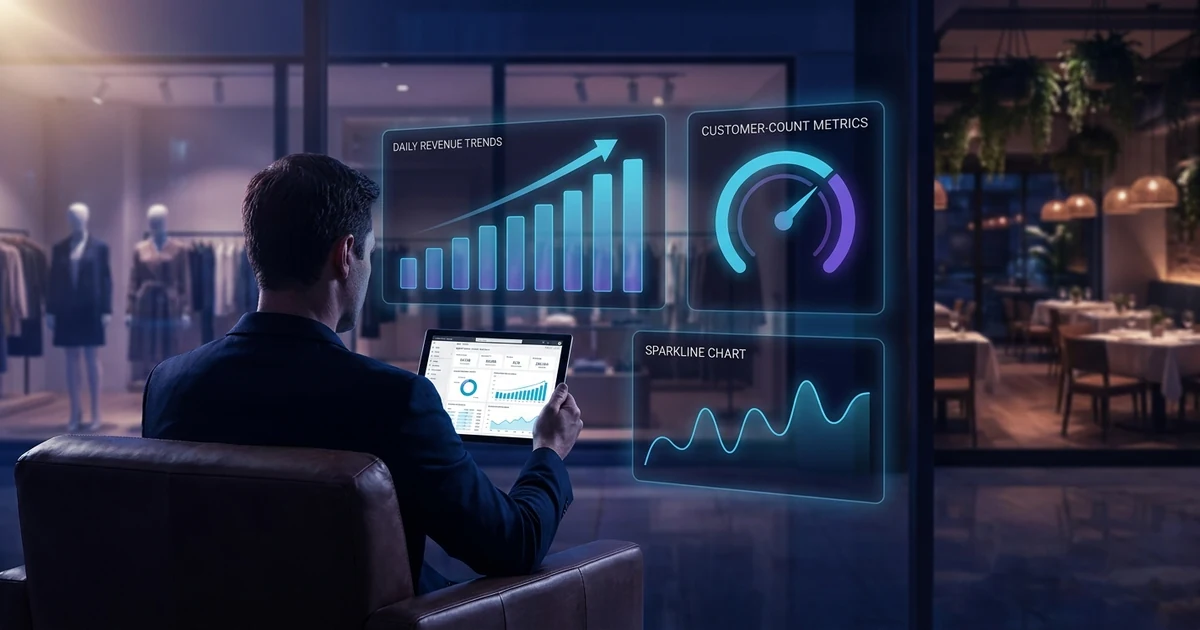
Most retail, e-commerce, and hospitality operators wait a week for last week's numbers. By the time the spreadsheet lands, the bad Tuesday is already gone, the under-performing location has bled another six days of payroll, and the promo you ran on Saturday is impossible to attribute. Petronella Technology Group, Inc. builds Microsoft Power BI dashboards that pull live data from your POS, e-commerce platform, inventory system, labor scheduler, and accounting ledger into one daily view your owner, COO, and store managers can act on before the lunch rush.
Audio preview
What Power BI dashboards do retailers, e-commerce operators, and hospitality businesses need?
The answer is the same across all three segments: one dashboard that consolidates yesterday's revenue, today's pace, this period's labor, this period's inventory position, and the customer behavior trend that explains why those numbers moved. The implementation differs by sub-vertical, but the operating discipline is identical: a daily owner briefing built on real point-of-sale, e-commerce, inventory, labor, and accounting feeds, refreshed every morning before the team huddle.
Petronella Technology Group, Inc. designs and ships that operating dashboard for brick-and-mortar retail, direct-to-consumer e-commerce, restaurants, multi-unit food service, hotels, fitness studios, and salons. The work covers POS integration, e-commerce platform pulls, inventory and labor systems, accounting ledgers, customer-cohort analysis, location-level profit-and-loss, and AI-augmented anomaly alerts so the team sees the dip in time to react. Pricing is shaped by location count, channel count, and integration scope, request a quote and a Power BI engineer will give you a fixed number after a short scoping call.
Ready to talk through what you'd put on the dashboard? Request a quote from Petronella Technology Group, Inc.
"Reporting takes a week and I can't see real-time location performance"
This is the single sentence we hear from new retail and hospitality clients more than any other. The data exists, it lives in the POS terminals at every store, in the e-commerce backend, in the inventory app, in the labor scheduler, in the accounting platform, and in the reservations system. But none of those systems talk to each other, and the operating team has to chase numbers across six logins to even guess at last week's location-level margin.
The result is a familiar pattern. Managers run the business on instinct because the data lands a week late. The owner discovers a slow Tuesday on the following Tuesday. A marketing promo's lift is unprovable. A new location's ramp curve is invisible until the quarterly close. A drift in basket size or table turn time hides inside aggregate revenue for months. By the time the trend surfaces, the cause is forgotten and the cost has compounded.
Power BI does not eliminate the underlying complexity. It collects the feeds, applies the business logic once, and serves the answer back to every person who needs it, owner, district manager, store manager, e-commerce lead, accountant, line cook running the line check, in the format and refresh cadence each role requires. Petronella Technology Group, Inc. has been building those collectors and dashboards for North Carolina and U.S. operators since 2002.
One service line, three sub-verticals covered
This page is intentionally consolidated. The KPI vocabulary, integration stack, and refresh patterns diverge by sub-vertical, but the Power BI delivery model and the operating discipline are shared. Pick the segment that fits and the team scopes from a vetted template library on day one.
Brick-and-Mortar Retail
Single-store boutiques, multi-store independents, regional chains, and franchise operators. Specialty, apparel, home goods, sporting goods, gifts, garden, pet, books. Same-store sales, basket size, units per transaction, conversion rate, inventory turns, GMROI, and shrink are the core anchors.
E-Commerce and D2C
Direct-to-consumer brands on Shopify or BigCommerce, multi-channel sellers on Amazon FBA and Walmart Marketplace, subscription-box operators, and digital-first creators selling physical product. GMV, CAC, LTV, repeat rate, AOV, conversion funnel, abandoned-cart, and return rate are the daily focus.
Hospitality
Restaurants, quick-service and fast-casual operators, multi-unit food-service groups, boutique hotels and small lodging portfolios, fitness studios, yoga and pilates, salons and spas, golf and country clubs. Location-level P&L, labor-to-sales ratio, prime cost percentage, occupancy, cover count, RevPAR, and table turn time anchor the operating cadence.
The metrics that actually matter, by segment
A dashboard is only as useful as the measures behind it. The Petronella Technology Group, Inc. delivery team starts every engagement with a KPI workshop to lock business definitions before a single visual is built. The vocabularies below are the starting library, we tune the formulas to your fiscal calendar, your channel mix, and your operating discipline.
Retail (brick-and-mortar)
- Same-store sales: period-over-period revenue for locations open in both windows, the single most-cited retail health metric.
- Basket size and units per transaction: average dollars and items per receipt, isolated from traffic volume.
- Conversion rate: transactions divided by door counter, foot traffic, or beacon count.
- Inventory turns: cost of goods sold divided by average inventory at cost over the period.
- GMROI (gross margin return on inventory investment): gross profit divided by average inventory cost.
- Shrink: physical inventory variance against book inventory, by category and location.
- Sell-through: units sold over units received in a window, by season and SKU.
E-commerce and D2C
- GMV (gross merchandise value): total order value before refunds, by channel and day.
- CAC (customer acquisition cost): paid-channel spend divided by new customers in the same window.
- LTV (customer lifetime value): contribution margin per customer over a forward window, by cohort.
- Repeat rate and 30/60/90-day repurchase: share of customers placing a second order inside the window.
- AOV (average order value): total revenue divided by order count, by channel.
- Conversion funnel: sessions to add-to-cart to checkout-started to checkout-completed, by traffic source.
- Abandoned-cart rate and recovery rate: dollar value of abandoned carts and the share recovered by email or SMS.
- Return rate: returned units over shipped units, by SKU and reason code.
Hospitality
- Location-level P&L: revenue, COGS, labor, and operating expense rolled to each unit on a daily, weekly, and period basis.
- Labor-to-sales ratio: total labor cost divided by net sales, the universal restaurant and service benchmark.
- Prime cost percentage: cost of goods sold plus total labor, divided by sales, the restaurant operator's single most important number.
- Cover count and average check: guests per service, dollars per guest, by daypart.
- Table turn time: minutes between seat and check-close, by table and server.
- Occupancy and ADR: rooms or seats sold over rooms or seats available, plus average daily rate for hotels and lodging.
- RevPAR (revenue per available room): occupancy multiplied by ADR for hotels, the industry-standard performance composite.
- Class fill and member churn: studio class capacity utilization and active-member retention for fitness and wellness.
The KPI list is a starting point. If a measure that matters to your business is missing, it belongs on the dashboard, that is the workshop conversation.
Connecting to the systems you already run
Petronella Technology Group, Inc. has shipped Power BI integrations with the platforms below. Where a vendor publishes a documented API, we read directly. Where a system exposes only a SFTP export or a CSV drop, we automate the file ingestion. Where credentials need to live inside a secure boundary, we deploy a Power BI gateway and rotate service-account secrets on a schedule. Your underlying contract with each vendor stays intact.
Point-of-sale
Square, Toast, Lightspeed Retail and Restaurant, Shopify POS, Clover, NCR Aloha, Aloha Cloud, NCR Voyix, Revel, TouchBistro, MICROS Simphony. Daily transaction-level pulls, modifier and combo support, tip and tender breakdowns, void and discount audits, server and cashier reporting.
E-commerce platforms
Shopify, Shopify Plus, BigCommerce, WooCommerce, Magento Adobe Commerce, Amazon Selling Partner API (SP-API), Walmart Marketplace API, eBay, Etsy, Faire. Orders, line items, fulfillment status, refunds, fees, payouts, and channel-attribution context.
Inventory and merchandising
Cin7 Core and Omni, Stocky, Fishbowl, Lightspeed Inventory, NetSuite Items and Inventory module, SkuVault, Linnworks, Brightpearl. Stock-on-hand by location, in-transit, allocated, available-to-sell, plus reorder-point and safety-stock signals.
Labor and scheduling
Homebase, 7shifts, Deputy, When I Work, Sling, HotSchedules, Crunchtime, ADP and Paychex (payroll-side joins for true labor cost). Scheduled vs actual hours, overtime exposure, no-shows, and labor-cost variance by shift and station.
Accounting and finance
QuickBooks Online and Desktop, Xero, Sage Intacct, NetSuite (multi-location, multi-currency), Microsoft Dynamics 365 Business Central. Chart-of-accounts mapping to location-level P&L, automatic period-end reconciliation, and the bridge from operations to GAAP financials.
Reservations and bookings
OpenTable, Resy, Tock, SevenRooms, Yelp Reservations for restaurants. Mindbody, Booker, Mariana Tek, Acuity Scheduling for fitness, wellness, and personal-service. Reservations against capacity, no-show rate, and forward-pacing for the next thirty days.
If your stack is not in the list, ask. The team has shipped one-off integrations with regional POS vendors, legacy retail-management systems, and home-grown spreadsheets routed through a Power BI gateway on a SharePoint folder. The gating constraint is "does the data leave the system in a structured, repeatable way?", not the vendor brand.
Seven dashboards that ship in a typical engagement
Every retail and hospitality build starts from a vetted template library and is tuned to your stack. The seven views below are the typical starting set, we add, remove, or merge them to match how your business actually runs.
1. Owner Daily Briefing
Audience: founder, owner, COO. Refresh: daily before 7 a.m. local time.
Yesterday's revenue and order count by location and channel, pace against last week and last year, today's pace versus forecast, the anomalies that crossed a tolerance band overnight, and the three actions the team is taking before lunch. One screen, mobile-friendly, sent as a Power BI app push notification.
2. Location Scorecard
Audience: district manager, store manager, GM. Refresh: hourly or near-real-time.
Sales, transactions, basket size, conversion rate, labor percentage, and staffing-to-traffic ratio for one location with a peer-store comparison. Row-level security so each manager sees their store and the district benchmark, not the neighbor's revenue line.
3. Same-Store Year-Over-Year
Audience: finance, operations, board. Refresh: daily.
Comparable-store sales growth excluding new locations and closures, with mix and price effects decomposed. Industry-standard composite for retail and restaurant boards and the metric that lenders, franchisors, and investors expect first.
4. Customer Cohort and LTV
Audience: e-commerce lead, marketing, growth. Refresh: daily.
First-order cohorts grouped by month or by acquisition channel, with second-order, third-order, and 12-month repeat rate. Contribution-margin LTV by cohort answers the CAC payback question, "is the December cohort actually paying back inside ninety days, or are we just churning paid-acquisition dollars?"
5. Inventory Health
Audience: buyer, merchandiser, e-commerce operations. Refresh: daily.
On-hand position by location, weeks-of-supply, sell-through, aged inventory and dead stock, plus reorder-point alerts. For multi-channel sellers, an allocation view that prevents oversells across Shopify, Amazon, and Walmart from the same warehouse pool.
6. Labor Cost Variance
Audience: general manager, kitchen manager, payroll. Refresh: daily, with intra-day labor-tracking for active shifts.
Scheduled hours versus actual clocked hours by shift and station, overtime exposure with a forty-eight hour warning band, and labor-to-sales ratio versus target by daypart. The single dashboard that most directly moves prime cost in hospitality operations.
7. Promo ROI and Channel Attribution
Audience: marketing, CFO. Refresh: daily during active promotion, weekly otherwise.
Incremental lift from each promotion or paid-media flight versus a control window, gross-margin contribution net of discount and acquisition cost, and a clean answer to "did the BOGO Saturday actually make money, or just pull demand forward?" Paid media joined to first-party order data, never just to ad-platform self-reported metrics.
Daily anomaly briefings written for your team
Static dashboards still require someone to look. Petronella Technology Group, Inc. layers AI assistance on top of every Power BI build so the system tells the team what changed and why, in plain English, before the team has to ask.
Daily anomaly briefings. An overnight job compares yesterday's metrics against the prior 28 days, isolates outliers that breached a tolerance band, and writes a one-paragraph narrative: "Store 4 sales dropped 18 percent yesterday. Foot traffic was within range; conversion rate fell 22 percent against the trailing 4-week median. Two new staff members were on the floor; the prior week's training cohort showed a similar dip that recovered by day five." The briefing lands in email or Teams by 6:30 a.m. local, ahead of the morning huddle.
Demand-forecast accuracy review. Each forecasted week or month is reconciled against actuals after close, the variance is decomposed by category, channel, and location, and the model is retuned. The buyer or e-commerce planner sees where the forecast missed, by how much, and in which direction, the input that drives smarter buys next quarter.
Customer segmentation via private large language models. For brands with first-party customer data, CRM, transaction history, support tickets, Petronella Technology Group, Inc. operates a fleet of private inference servers (our own hardware in our own facility) so cluster analysis, segment naming, and narrative customer-profile summaries can be run without sending personally identifiable information to a third-party AI vendor. The same private inference layer powers chat-based queries against your dashboard for the leadership team, "show me which SKUs are dragging margin in Q3", answered in seconds, with no data leaving your tenant.
For clients regulated under HIPAA, PCI DSS, or CMMC requirements that constrain where data may be processed, the private-inference path is the only acceptable AI augmentation option. The conversation pattern is identical to a public chatbot; the data residency is not.
One operating dashboard. One number per location. Less guessing.
Petronella Technology Group, Inc. has been building secure, role-scoped Power BI for retail and hospitality operators since the platform existed. Talk to a Power BI engineer about your dashboards and get a fixed-price quote in one short call.
How a retail and hospitality engagement runs
Pricing for Power BI for retail and hospitality is variable because the work depends on location count, channel count, and integration scope. A single-location boutique with Square POS and Shopify is not the same engagement as a fifteen-unit franchise on Toast with Cin7 and three accounting tenants. Request a Quote and a Power BI engineer at Petronella Technology Group, Inc. will scope the work and return a fixed number, usually within one business day, so you can budget against a real engagement, not a marketing brochure.
The typical engagement runs in three phases:
- Discovery and KPI workshop (1 week). Map your existing data sources, lock business definitions for every measure, agree on the dashboards to ship, and document refresh cadences and role-based access. Output is a one-page architecture and a fixed-fee statement of work for the build.
- Build and integrate (2 to 6 weeks). Wire the integrations, model the semantic layer in Power BI, ship the dashboards from the template library, and tune the visuals to your brand. Daily check-ins, midpoint demo, and a stakeholder walkthrough before launch.
- Launch, train, and manage (ongoing). Roll out to managers, owners, and the analyst team with role-based training. Optional managed reporting and dashboard maintenance keeps the model healthy as your stack changes, with a quarterly tune-up to add the metrics that emerged in the last 90 days of operations.
Payment terms are 100 percent upfront at contract execution for fixed-fee phases. Managed reporting renewals run monthly or annually.
What a typical engagement looks like
Six representative engagement shapes. Your scope will match one of these or a close variant; the team scales the work up or down accordingly.
Five-store retail chain
Single brand, five locations, Lightspeed Retail and QuickBooks Online. Eight to twelve weeks. One owner-daily briefing, one location scorecard with row-level security per manager, one inventory-health dashboard, and a same-store year-over-year view for the founder.
Five-million-dollar D2C brand
Shopify Plus, Amazon SP-API, Klaviyo, QuickBooks Online, Cin7 Core. Six to ten weeks. GMV by channel, customer cohort and LTV by acquisition source, abandoned-cart funnel by SKU and traffic source, return-rate analysis, and a paid-media ROI dashboard joined to first-party orders.
Twelve-unit restaurant group
Toast POS, 7shifts, Restaurant365 or QuickBooks Online, OpenTable. Ten to fourteen weeks. Location-level P&L, prime cost percentage by unit, labor variance by shift, cover count versus reservation forecast, and a multi-unit benchmark for the regional operator.
Twenty-five-unit franchise
Mixed POS (Aloha plus newer Toast sites), Homebase, Sage Intacct multi-location, branded gift-card platform. Twelve to twenty weeks. Franchise-wide same-store sales, royalty and fee reporting, brand-standard compliance scoring, and a franchisor-facing portal so each operator sees only their stores.
Single-location boutique hotel
Cloud PMS (Cloudbeds, Mews, or similar), restaurant POS for the F&B outlet, payroll, QuickBooks Online. Six to eight weeks. RevPAR and ADR tracking, F&B-versus-rooms revenue mix, on-the-books pace for the next thirty and ninety days, and labor variance for housekeeping and front desk.
Multi-state hospitality holding
Mixed operating brands, restaurants, hotels, fitness, salons, under one ownership group. Fourteen to twenty weeks. A holding-company executive summary, brand-by-brand operating drill-downs, working-capital and cash-position dashboard, and a private-AI question-and-answer layer for the operating partner.
How Petronella Technology Group, Inc. compares to the alternatives
| Petronella Technology Group, Inc. | Native POS or e-commerce analytics | Looker, Tableau, or generic BI | Hire an internal data analyst | |
|---|---|---|---|---|
| Cross-system integration | POS, e-commerce, inventory, labor, accounting, reservations, all in one model. | Limited to that vendor's data; cross-system joins require manual export. | Possible, but you build and maintain the connectors yourself. | Possible, but ramp time is months and the analyst's first build replaces their predecessor's. |
| Time to first useful dashboard | Two to six weeks from kickoff for most retail and hospitality scopes. | Hours, but with a narrow single-vendor view that fragments by channel. | Three to nine months for a comparable cross-system build. | Six to twelve months including hire, ramp, and first deliverable. |
| Total cost of ownership, year one | Fixed-fee build plus optional managed reporting; predictable and bounded. | Subscription-included but limited; teams outgrow the native view within a year. | License plus services plus internal time; often higher than a comparable Power BI build. | Salary, benefits, recruiting, tools, training, loaded cost typically exceeds a managed engagement. |
| Security and compliance posture | CMMC RPO #1449 firm; PCI-aware design for card-handling environments; row-level security and audit logging in every build. | Vendor-managed; auditability varies by platform. | Strong, but configuration is on you. | Depends on the hire and the internal IT team. |
| AI augmentation | Optional Microsoft Copilot enablement, plus a private-inference path for regulated or sensitive data. | Vendor-specific AI features; data leaves your tenant. | Copilot or partner AI add-ons. | DIY; quality varies wildly. |
| Ongoing capacity | Quarterly tune-ups and managed reporting available; the team is one phone call away. | None, the vendor improves the product on their schedule. | Contract or in-house team to maintain. | The full backlog of analytics requests now lands on one person. |
The right answer depends on size, complexity, and growth trajectory. For most multi-location retail and hospitality operators in the five-to-fifty-location band, or any D2C brand in the one-to-twenty-five-million revenue band, the managed-engagement model is faster, more predictable, and lower total cost than the alternatives.
A North Carolina firm that ships secure dashboards, not slide decks
Petronella Technology Group, Inc. was founded in Raleigh, North Carolina in 2002. The firm holds CMMC Registered Provider Organization status (RPO #1449) under the Cyber AB and maintains a four-person bench of CMMC Registered Practitioners. The team's day job is operating analytics, managed IT, and cybersecurity for U.S. businesses that cannot afford for the BI layer or the data pipeline behind it to fail.
That security-first stance carries directly into the Power BI work. Every dashboard ships with row-level security, sensitivity labels where appropriate, audit logging on the workspace, and a documented data-residency story. For card-handling retailers and restaurants, the team designs around PCI DSS scope reduction so the BI layer never touches primary account numbers. For brands with first-party customer data, the AI layer runs on private hardware in our own facility, the trade-off most generic BI shops cannot offer.
The result is a Power BI partner who can answer the dashboard question and the security question in the same meeting, with the same person, in the same architecture diagram. That overlap is unusual in BI consulting; it is the reason a regulated multi-unit operator should call our team first.
Common questions from retail, e-commerce, and hospitality operators
Does Power BI connect to my POS?
Yes, for every major U.S. POS vendor in retail and hospitality and most regional vendors. Square, Toast, Lightspeed, Shopify POS, Clover, Aloha, Revel, TouchBistro, MICROS Simphony, and NCR Voyix all expose either a documented API or a structured export channel that Power BI consumes through a dataflow or gateway. For older or regional systems we typically use scheduled CSV or SFTP drops with an ingestion job. The data lands in a unified semantic model so a multi-location operator on three different POS systems still sees one consistent revenue line.
How does Power BI work with Shopify, BigCommerce, and Amazon FBA?
Shopify and BigCommerce both publish structured APIs that Power BI reads natively or via a Power Query connector. Amazon Selling Partner API (SP-API) requires a registered developer-profile and OAuth flow, which our team configures and rotates on your behalf. The result is a unified order, line-item, fulfillment, refund, and fee dataset across every channel, so the CAC and LTV math reflects the entire commercial reality of the brand, not just Shopify-only numbers.
Can I see real-time numbers, or only yesterday's data?
Both. Refresh cadence is a per-dataset choice. Some Power BI datasets refresh in near-real-time through DirectQuery against the source; others import a snapshot on a schedule (every 15 minutes, hourly, daily). For most retail and hospitality operators, the right pattern is hourly refresh on operating dashboards (sales, labor, inventory position) and daily refresh on analytical dashboards (cohort, LTV, same-store year-over-year). True intra-minute dashboards exist for high-velocity hospitality settings, we ship them where the operational need is real and the source system can sustain the query load.
How is multi-location data unified across different POS systems?
Through a semantic model. Every POS feed is normalized into the same conceptual schema, transactions, line items, tenders, modifiers, voids, refunds, in a Power BI dataflow before the dashboards consume it. A location running Aloha and a sister location running Toast both feed the same "sales by location, by daypart, by category" measure. The complexity stays in the dataflow layer; the analyst, manager, and owner see one clean model. This is the single most important architectural decision in a multi-system rollout and the one a generic BI shop typically gets wrong.
What does a Power BI for retail and hospitality engagement cost?
Pricing depends on location count, channel count, and integration scope. A single-location D2C brand on Shopify with QuickBooks Online is a smaller engagement than a twenty-five-unit franchise on three different POS platforms. Request a quote and a Power BI engineer at Petronella Technology Group, Inc. will scope the work and return a fixed-fee number, usually within one business day. Payment terms are 100 percent upfront at contract execution for fixed-fee phases; managed reporting renewals run monthly or annually.
Do I need Microsoft Fabric or a Power BI Premium capacity?
Not for most retail and hospitality scopes. Power BI Pro per-user licensing handles the typical multi-location operator with up to a few dozen managers and analysts. Microsoft Fabric (F-SKU) or Power BI Premium per-capacity is appropriate once you need very large semantic models, paginated reports for franchisee or vendor distribution, Copilot in Power BI, or DirectLake performance on a Fabric lakehouse. The team will recommend the licensing tier honestly during scoping, right-sizing the SKU often saves meaningful licensing spend against the default sales pitch.
How do you handle PCI compliance for card-handling retail and restaurants?
Power BI itself never touches primary account numbers (PANs), the POS retains and tokenizes card data inside its own PCI scope, and Power BI consumes only transaction totals, tenders, settlement summaries, and reference identifiers. The dashboard architecture is designed for PCI scope reduction: no cardholder data crosses the BI boundary, audit logging is on by default, and sensitivity labels mark any dataset that touches even tokenized payment metadata. For operators carrying their own PCI DSS attestation, the BI layer becomes a documented non-cardholder system in the scoping narrative.
Will my franchisees, store managers, or location GMs see each other's numbers?
No, unless you want them to. Power BI's row-level security model restricts each user to the rows of data they are authorized to see. A district manager sees their district and a roll-up benchmark; a store manager sees only their store and the district average. A franchisee sees only their unit's data and the franchise-wide benchmark roll-up. The same dashboard renders different content for each viewer, governed by a single security model that is itself auditable and version-controlled.
What about Microsoft Copilot in Power BI, does it work for retail data?
Copilot in Power BI can produce natural-language summaries, suggest measures, and answer "show me my top-selling SKU last month" questions against a properly-modeled semantic dataset. It requires Microsoft Fabric capacity (F2 or higher) or a Power BI Premium SKU and an admin enablement step. For brands and operators handling first-party customer data, regulated information, or PCI-relevant context, the team often pairs Copilot with a private-inference alternative that keeps customer queries inside your tenant. We will help you pick the right tool per dashboard during scoping.
How long does it take to ship the first dashboard?
Two to six weeks from kickoff for most retail and hospitality scopes. A single-location D2C brand on Shopify can see a first usable dashboard in two weeks; a multi-unit franchise on mixed POS systems will run closer to six. The discovery and KPI workshop in week one locks the definitions; the build phase ships the dashboards from the template library; the launch phase trains managers and rolls the model out. The contract is fixed-fee, so the timeline is yours to enforce.
Can you migrate us off Looker, Tableau, or a legacy BI tool?
Yes. Migrations from Looker, Tableau, Domo, Qlik, and various legacy BI systems are a recurring engagement shape. The team inventories your existing reports, maps them to a Power BI semantic model, rebuilds the visuals, and runs a parallel period so you can verify numbers match before sunsetting the predecessor. Migration projects are scoped separately and priced by report count and data-source complexity, ask for a migration quote on the contact form if that is your starting point.
Where is Petronella Technology Group, Inc. located and who will I work with?
Petronella Technology Group, Inc. is headquartered in Raleigh, North Carolina, address 5540 Centerview Dr. Suite 200, Raleigh, NC 27606. The phone is (919) 348-4912 and Penny, the AI receptionist, answers 24/7. The Power BI delivery team works remotely with on-site visits to North Carolina, Virginia, and South Carolina clients as needed; engagements outside the region run remotely. Your scoping call will introduce you to the Power BI engineer assigned to your build; the same person stays with the engagement through launch and any managed-reporting renewal.
Where Power BI fits inside the broader Petronella offering
Power BI for retail and hospitality is one offering in a wider operating-systems and security practice. The links below cover the most common adjacent engagements that retail, e-commerce, and hospitality operators ask about during a BI scoping call.
- Power BI consulting (pillar service line), the parent service line, including dashboard development, Microsoft Fabric, governance, training, and managed reporting.
- Copilot for Power BI consulting, readiness, prerequisites, governance, and the private-AI alternative for regulated data.
- Managed IT services in Raleigh, NC, the operating-IT foundation underneath your POS, e-commerce, and back-office stack.
- AI services, private inference, customer-segmentation models, and the AI-augmentation layer for dashboards.
- Cybersecurity, PCI-aware design, card-handling scope reduction, and incident response for card-accepting retail and hospitality.
- Our team, the people who will own your Power BI engagement, including the four CMMC Registered Practitioners on staff.
About the author
Stop running yesterday's business on a one-week lag.
Petronella Technology Group, Inc. ships secure, role-scoped Power BI dashboards for retail, e-commerce, and hospitality operators, usually live in two to six weeks. Request a fixed-fee quote and a Power BI engineer will call you back within one business day.