When Anthropic rolled out Claude Design on April 17, 2026, the headlines pitched it as the company's answer to Figma and Canva, a chat-plus-canvas workspace that turns a written brief into a polished prototype. That framing is accurate, but it misses the more interesting story for anyone building AI tools inside a regulated business. Claude Design is the latest visible expression of a design philosophy Anthropic has been pushing for years. Every product surface the company ships, from Artifacts to the Claude Code terminal to the new Claude Design canvas, reflects a consistent set of choices about how humans and models should work together.
Petronella Technology Group has spent the last two years building AI agents for clients in healthcare, defense supply chain, legal, and finance. The lessons that surface again and again in those projects map closely to what Anthropic publishes about its own design approach. This article walks through the principles, explains where they came from, and shows how they translate into the practical patterns a CMMC-bound contractor or a HIPAA-covered entity can actually deploy.
What "Claude Design" resolves to in April 2026
"Claude Design" now refers to a specific Anthropic Labs product, but it also gets used loosely to describe the broader design language across Anthropic's tooling. Both interpretations matter for a business audience, so this post covers both.
The product, announced at anthropic.com/news/claude-design-anthropic-labs, is a collaborative canvas for designers, product managers, and engineers. It pairs a chat panel on the left with a live design canvas on the right, and it reads your organization's existing codebase and design files during onboarding so every project stays on brand. The Claude Help Center's Get Started guide lays out the workflow: create a project, describe the output, review the first generation, refine through conversation or inline comments, then export to Canva, PDF, PPTX, HTML, or hand off to Claude Code.
The broader design language is the more consequential story. It is the set of repeatable choices Anthropic makes across every product: Artifacts sit in a dedicated panel rather than getting buried in chat history, Claude Code preserves terminal conventions instead of replacing them, agent harnesses separate generation from evaluation, and every production loop assumes a human in the loop with an approval surface. Those choices add up to a philosophy, and that philosophy is what a regulated business should steal.
The four foundations of the Claude design language
Anthropic rarely publishes a tidy list of design principles, but four themes show up across their research papers, engineering blog posts, and product documentation often enough to treat them as foundational.
Safety first, not safety-bolted-on. In its Core Views on AI Safety, Anthropic argues that safety research is urgent and that deployment decisions should bend toward caution even under competitive pressure. They delayed the original Claude release to finish safety work. That posture shows up visibly in every interface they ship. Claude refuses to take destructive actions without confirmation. Claude Code shows you the diff before writing a file. The Claude Design canvas never auto-pushes to production. Safety is load-bearing, not decorative.
User agency over autonomy. The Claude Artifacts announcement explains the rationale for pulling substantial output into a dedicated window: separation of concerns. The chat is for conversation, the artifact is for the thing you are actually building. You can version, revert, share, and edit without losing context. Contrast that with autoplay style AI products that hide the work, stream it past you, and hope you trust the result. Anthropic consistently picks the path that puts the user in charge of accepting, rejecting, or editing each output.
Interpretability as a design constraint. Anthropic has invested heavily in mechanistic interpretability, described in Constitutional AI: Harmlessness from AI Feedback and its follow-on research. The production side effect is products that show their work. Claude Code prints the command it is about to run. Claude Design surfaces adjustment sliders that correspond to specific design elements. Artifacts preserve version history. The model's behavior stays legible to the human driving it.
Composable building blocks rather than monoliths. Anthropic's engineering post on harness design is explicit: "Find the simplest solution possible, and only increase complexity when needed." The company pushes agent work into small, specialized pieces with structured handoffs between them rather than one giant autonomous loop. That same thinking drives the Claude Design architecture, where the chat panel and canvas panel handle distinct jobs and the export layer hands off cleanly to Canva or Claude Code.
Those four foundations bleed into every interface choice Anthropic makes. They are also exactly what a regulated industry buyer needs from any AI tool they deploy.
Why regulated industries should care about interface choices
A CMMC Level 2 contractor cannot put client data into a chatbot whose output is opaque, unauditable, or unreviewable. A HIPAA-covered practice cannot use a tool that takes autonomous action on protected health information without a human approving the step. A financial services firm has to demonstrate that the human reviewed the decision, not just the model. Those are not wish-list features. They are audit requirements.
Read the Claude design language again through that filter and the picture sharpens quickly.
Artifacts give you an auditable object. The output is separate from the conversation, versioned, and exportable, which means you can capture it into an evidence repository, diff it against a prior version, or route it through a review workflow. Compare that to a generic chat AI where the answer is a blob of tokens mixed in with user messages, system prompts, and model tangents.
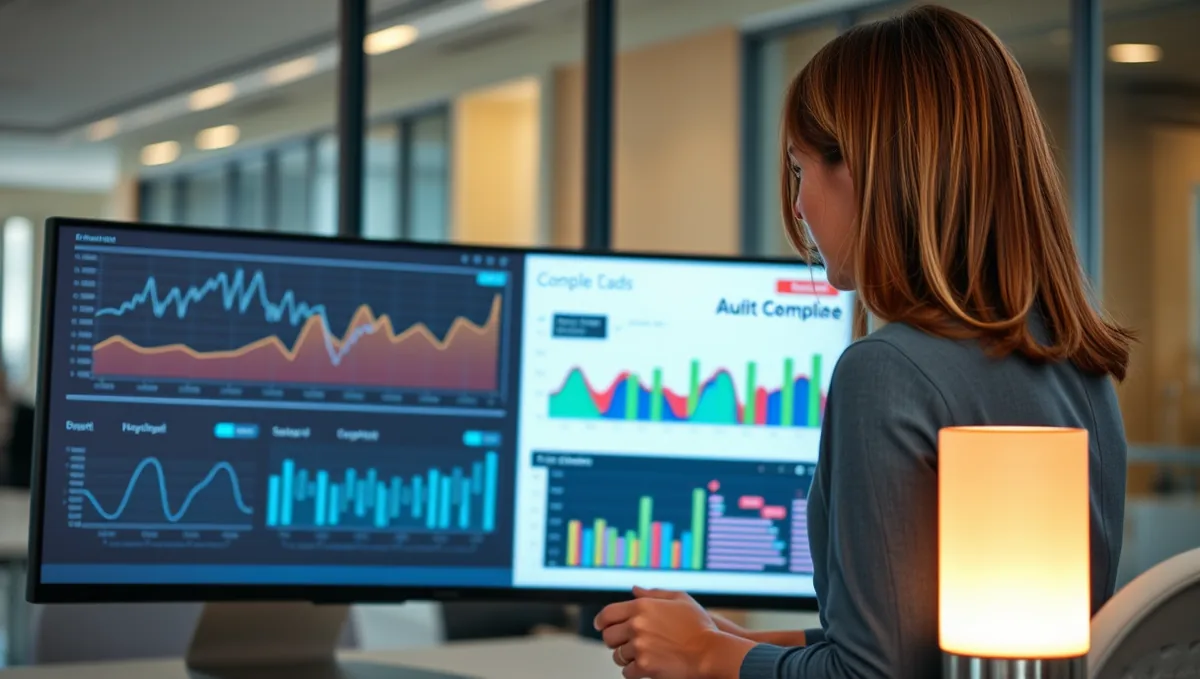
The chat-canvas split that Claude Design uses is itself a compliance-friendly pattern. The canvas is the deliverable. The chat is the reasoning trail. An auditor can review the chat to confirm the human directed the work, then review the canvas to confirm what actually got produced. That maps cleanly to NIST SP 800-171 requirements around access control, audit logs, and accountability, which is why CMMC-bound subcontractors keep asking for tools that work this way.
The harness design principles in Anthropic's engineering blog are even more directly useful. The harness design post argues for separating generation from evaluation, using structured handoffs between specialized agents, and converting subjective judgments into concrete gradable criteria. Those are the same patterns a sensible operations team would use inside a SOC 2 Type II control environment. Generation is the worker. Evaluation is the reviewer. The handoff is the log entry. The gradable criteria are the acceptance test.
Petronella Technology Group is a CMMC-RP team, Cyber AB Registered Provider Organization number 1449 (verified at cyberab.org/Member/RPO-1449-Petronella-Cybersecurity-And-Digital-Forensics), founded in 2002 with a BBB A+ rating held since 2003. Every AI agent Petronella builds for a regulated client gets audited against those frameworks before it ships. The Claude design language is not only compatible with that process. It actively encourages it.
Approval gates, audit trails, and agent handoffs
The single most important pattern in the Claude design language for regulated work is the approval gate. Anthropic's harness guidance spells it out plainly: isolate evaluation from generation, because self-evaluating agents tend to praise their own work. External evaluators, whether another agent or a human reviewer, provide more reliable feedback and enable iteration.
Petronella treats that as a hard rule. Every production agent the firm ships follows the same basic pattern.
The generator produces a candidate output. Maybe it is a drafted email to a prospect, a proposed SQL query against a client database, a patient scheduling decision, or an outbound voice call script. The generator does not send, execute, commit, or act. It just produces.
The candidate moves into an approval queue. For most Petronella clients that queue lives in PostgreSQL, is governed by a row-level security policy, and is surfaced on a phone-friendly approval page. The human reviewer, typically the client's authorized owner, sees the candidate, sees the context that produced it, and sees the options: approve, deny, or edit.
The handoff to the next step happens only after the approval is recorded. The recorded approval is the audit log entry. It captures who, what, when, and what was changed if the reviewer edited the candidate before approving.
This is the exact pattern that drives Petronella's own outbound sales operation. Every morning the firm's internal approval digest lands on the founder's phone at 8:55 Eastern with that day's generated outbound emails. The reviewer approves, denies, or edits each one. At 9:30 Eastern, the send pipeline reads only the items that came back with approval flagged true. The generator and the actor are separated, the human is the evaluator, the decision is logged, and nothing goes out that the reviewer did not see.
The firm currently operates more than ten production AI agents built on this generator-then-approve scaffold. Penny is the inbound voice receptionist that answers (919) 348-4912, qualifies callers, and books a free fifteen-minute assessment onto a principal's calendar once the live human confirms. Peter is the conversational chat agent on petronellatech.com that handles prospect questions and routes regulated-industry inquiries to the right intake form. ComplyBot walks site visitors through compliance-framework questions and drafts structured briefs for human follow-up. The Auto Blog Agent drafts long-form articles, runs them through an internal review queue, and only publishes after a human editor clears the draft. A growing fleet of private digital twin voice assistants runs inside client tenants where the principal wants a branded voice that sounds like the firm but never commits to a deal without explicit approval. Every one of those agents inherits the same approval-gate, audit-trail, reviewable-output architecture.
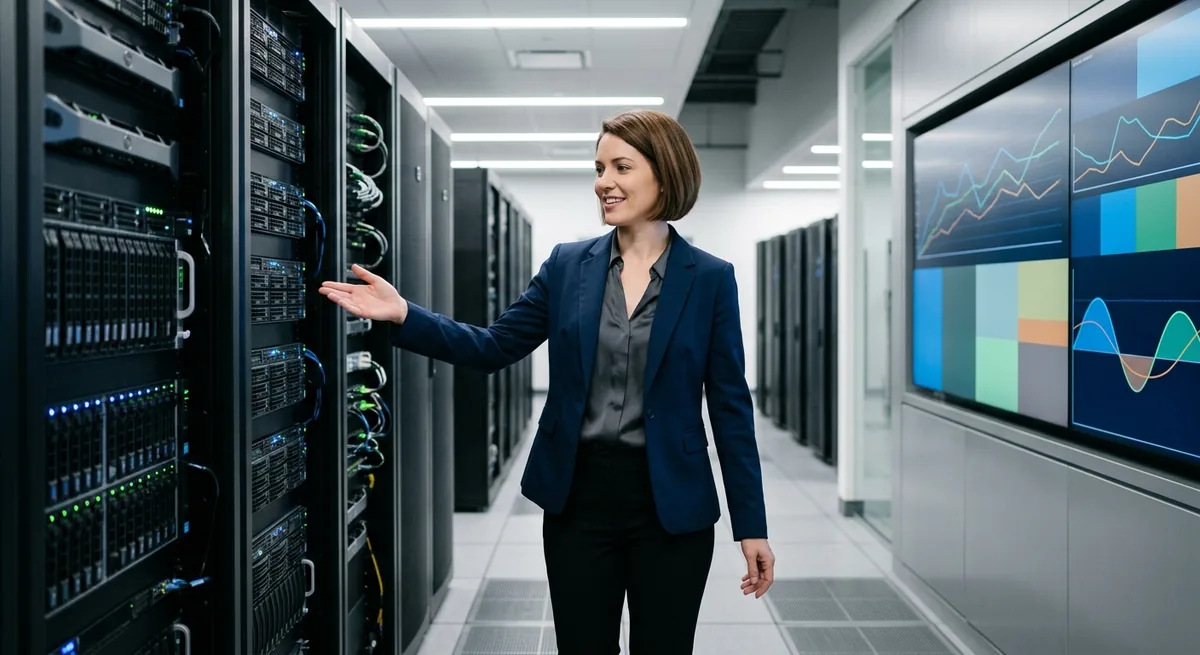
The same pattern runs inside the private AI cluster Petronella sells to clients who need to keep their data sovereign. Learn more about how that infrastructure works at /solutions/private-ai-cluster/. The approval gate is not optional. It is the first thing set up, before a single model call gets wired.
Reviewable outputs beat autonomous outputs
Claude Design makes one interface choice that is worth copying directly. When the model generates a design, it also produces custom adjustment sliders that correspond to specific elements of that design. You can push a slider to change spacing or color or type weight, and the canvas responds live. That is a deeper idea than it looks.
The slider is a surface for reviewing and editing the model's choice. It is not a hidden parameter buried inside a config file. It is a first-class control that lets the human change what the model did without rewriting the prompt or regenerating from scratch.
Most AI tooling does the opposite. It produces a result, and if you want to change the result you have to ask again in natural language, cross your fingers, and hope the new generation kept the good parts. That works for casual use. It fails for production, because production needs predictable, targeted editing, not roll-the-dice regeneration.
When Petronella builds a client-facing AI agent, every generated output gets paired with edit affordances. A proposed email gets an edit box with each field broken out: subject, opening, body, signature, call to action. A proposed schedule gets a calendar view with draggable slots. A proposed compliance document gets inline tracked changes that the reviewer can accept or reject one by one. The affordances are specific, bounded, and reviewable.
That matters for compliance, but it also matters for trust. Clients who see that they can shape each decision adopt the agent faster and deeper. Clients who feel the agent is a black box eventually revolt, even if the outputs are good. Reviewable output wins every time.
The Claude Design canvas as a model for client-facing AI
Claude Design's two-panel layout, chat on the left and canvas on the right, is a template a regulated industry builder can steal for almost any internal AI tool.
Put the reasoning in the left panel. That is where the user states intent, the model asks clarifying questions, and the conversation builds context. Nothing in the left panel ever goes to production. It is safe to be exploratory, speculative, and wrong.
Put the deliverable in the right panel. That is where the actual artifact lives: the draft report, the proposed schedule, the generated code, the customer email, the compliance checklist. The right panel is the thing that needs to be correct, reviewed, and auditable.
Put the handoff at the boundary. When the user approves the right panel, that is the moment the system takes action. Before approval, nothing has happened in the real world. After approval, the action is logged with the approver's identity and the specific output they approved.
Petronella uses this pattern across client deployments. The private digital twin voice assistants the firm builds, described at /solutions/digital-twin-voice/, follow it literally. The assistant takes an inbound call, builds a structured proposal inside a right-panel equivalent in the client's dashboard, and waits for the human principal to confirm before any commitment reaches the caller. The left panel is the raw transcript and the assistant's reasoning. The right panel is the proposed next action. The boundary is the approval.
That is the same logic Anthropic applied when they split the Claude interface into chat and canvas. The pattern is older than Claude Design. Anthropic just made it the visible default.
Design systems as guardrails
One of the most overlooked features of Claude Design is the design system ingestion step. During onboarding, Claude reads your team's existing codebase and design files and builds an internal model of your colors, typography, and components. From that point forward, every generated design uses your system automatically. The admin guide describes how that ingestion runs at the organization level, so every team member inherits the same brand guardrails.
This is a concrete implementation of a broader principle: give the model constraints up front so you do not have to police every output after the fact.
For a regulated industry AI agent, the equivalent is the policy layer. Before any generation runs, the system injects the rules: never disclose protected health information, never promise a regulated outcome, never contradict the firm's documented compliance posture, always route ambiguous requests to a human. Those rules sit in a config file the client owns, not in a prompt the developer might change later. The result is an agent that stays on brand in the compliance sense, the same way Claude Design stays on brand in the visual sense.
Petronella sets these guardrails once per client and then enforces them across every agent in that client's fleet. A voice agent for a dental practice, a scheduling assistant for a construction firm, and a document review bot for a law office all live inside the same policy framework. The firm's AI services hub details how those guardrails get installed and monitored.
Avoiding AI slop in practice
Anthropic's frontend aesthetics cookbook spells out a problem every AI builder eventually meets: models converge toward generic, average-looking outputs. The cookbook calls this the "AI slop" aesthetic and names specific offenders: overused fonts like Inter and Roboto, clichéd purple gradients on white backgrounds, predictable layouts, cookie-cutter components.
The fix Anthropic recommends is specific guidance across four dimensions: typography, color and theme, motion, and backgrounds. The principle generalizes. If you want distinctive output from a model, you have to give the model distinctive constraints.
The same failure mode hits every generative AI deployment, not just visual ones. Sales emails converge toward a generic tone with the same "I hope this finds you well" opener. Drafted legal language converges toward overhedged paragraphs. Proposed code converges toward stack-default patterns. The cure is the same in every case: name the defaults you hate, specify the constraints you want, and reference concrete inspirations.
Petronella enforces this at the prompt layer. Every outbound email template the firm's agent fleet produces gets preflighted against a blocklist: no em-dashes, no marketing clichés, no fabricated statistics, no corporate-speak that a human would never actually say. The blocklist is maintained in source control and reviewed monthly. The model is fast, but the guardrails are deliberate.
What Petronella applies from the Claude design playbook
Five concrete patterns show up in every Petronella build, all of them traceable to the Claude design language.
First, a visible artifact surface for every generated output, separate from the conversation that produced it. Clients who are reviewing proposed actions should never have to scroll a chat transcript to find the thing they are approving.
Second, an explicit approval gate between generation and action. No agent takes an action that can reach a customer, a regulated system, or a client dataset without a recorded human approval. The gate is the audit log.
Third, separation of the generator from the evaluator. The same agent does not grade its own work. A second model, or a human, or both, reviews the candidate before it advances.
Fourth, a policy layer loaded at context time. The rules that define what the agent can and cannot do live outside the prompt and get injected into every session. Changing the rules does not require redeploying the agent.
Fifth, legible, editable controls for every model decision that matters. Not just regenerate buttons. Actual affordances that let a reviewer change a single field without throwing away the rest of the work.
Those five patterns are not proprietary. They are available to any shop that is paying attention to what Anthropic publishes. The reason they matter in a regulated context is that they convert abstract compliance language into concrete implementation. A CMMC assessor who asks how the firm controls AI-driven access to controlled unclassified information gets a real answer instead of a hand-wave. A HIPAA audit finds an actual approval log instead of a folder of model outputs.
The business case for aligned design
A regulated-industry buyer has three questions about any AI system: Can I see what it did? Can I approve or reject what it proposes? Can I prove to an auditor that the control worked? A system built on Claude design principles answers all three in the affirmative by default. A system that is not built that way answers all three with paperwork and workarounds.
Petronella has watched the difference play out on real projects. The AI tools that follow these patterns get adopted. The ones that do not either get sidelined or create compliance exposure that the client eventually has to remediate, usually by firing whoever built the tool. The cheap version of that remediation is rebuilding the tool. The expensive version is explaining the incident to a regulator.
Craig Petronella, the firm's founder, holds the CMMC-RP credential along with CCNA, CWNE, and the DFE certification number 604180. The firm's engineering team is fully CMMC-RP certified. Every AI agent the firm ships is reviewed against the same frameworks clients are audited against, because the only way to deliver an AI tool a regulated client can actually use is to build it as if the client's auditor is already watching.
Where to start
A useful way to absorb the Claude design language is to use it, not just read about it. Claude Design itself is available to Pro, Max, Team, and Enterprise subscribers, and running even one small project through the chat-canvas workflow makes the design choices visible in a way a blog post cannot. Claude Artifacts are available across the broader product. Both are worth hands-on time before you sit down to specify an AI tool for your own business.
If the work is serious, though, the reading will not be enough. Deploying AI inside a CMMC-bound contract, a HIPAA-covered practice, or a SOC 2 audited workflow is not a weekend project. Petronella Technology Group builds, deploys, and maintains AI agents that pass the audits the first time, and works on-site or remotely with clients across the Triangle, the Research Triangle Park, and the broader Southeast.
The fastest way to see whether this applies to your operation is a short call. Dial (919) 348-4912 and ask for Penny, the firm's inbound AI receptionist, who will book a free fifteen-minute assessment directly onto a principal's calendar. Or visit /contact-us/ and send over the details of the system you are trying to build. Either way, the conversation starts with what you need to prove to your auditor and works backward to the design. That is the Claude way, applied to your business.
Reference build sheets, a hardening checklist for open-weight model hosting and a data-sovereignty map for running AI on your own hardware.
Get the free guide